
· The Fanily
Skin flooding in winter: how to layer hydration for a strong skin barrier
The heating is on, it’s cold outside and suddenly your skin feels tight, rough or sensitive. Sound familiar? You’re not alone. According to trend analysts Spate, searches for soothing ‘relief’ skincare rose by 60.4% in a year, and one method has been doing the rounds on TikTok for months: skin flooding. In this article you’ll read why your skin behaves differently in winter, what skin flooding actually is and how to do it properly, step by step.
In short
- Cold, dry outdoor air and heated indoor air draw moisture from your skin.
- With skin flooding, you apply hydrating layers to damp skin, from thinnest to thickest.
- More layers aren’t always better: for oily or acne-prone skin it can backfire.
Why does your skin behave differently in winter?
In winter, your skin is hit from two sides. Outside, the air is cold and holds little moisture. Inside, the heating dries the air out even more. As a result, water evaporates from your skin more quickly. The outcome: skin that feels tight, dry and more easily sensitive, and that looks duller.
On top of that come a few winter habits that don’t help, such as long, hot showers or a heavy scarf rubbing against your chin. Your skin barrier, the protective outer layer that holds in moisture and keeps irritants out, then has to work extra hard.
Which signs show that your skin barrier needs extra care?
- Your skin feels tight, especially right after cleansing.
- Products you normally tolerate well suddenly sting.
- You notice dry patches or flakes, for example around your nose or on your cheeks.
- Your skin looks dull and tired, even after a good night’s sleep.
- You see redness more quickly after cold, wind or heat.
Not sure whether your skin is dry or actually dehydrated? It makes a difference to what it needs. Start with the difference between dry and dehydrated skin.
What is skin flooding?
Skin flooding literally means ‘flooding’ your skin with moisture. The idea is simple: instead of one rich cream, you apply several light, hydrating layers, from the thinnest to the thickest texture, to skin that is still slightly damp. Ingredients that attract water, such as hyaluronic acid and glycerin, can bind extra moisture on damp skin. A moisturiser as the final layer then locks that moisture in.
It isn’t really new: Korean routines have worked with layers for years. What sets skin flooding apart is the focus on hydration and a short, clear order of steps. It works best as an evening routine, because your skin then has the whole night.
How do you do skin flooding, step by step?
- Cleanse gently. Use a mild cleanser and lukewarm water. Hot water and foaming cleansers strip more from your skin than necessary.
- Leave your skin slightly damp. Pat your face gently, but not completely dry. You can also use a hydrating mist.
- Toner or essence. The thinnest layer. Press a few drops into your skin with your hands.
- Hydrating serum. A light, water-based formula with, for example, hyaluronic acid and glycerin.
- Moisturiser. The thickest layer seals everything in and locks in the moisture. If your skin is dry, choose something richer.
Work quickly: apply the next layer while the previous one is still a little damp. That way, the whole routine takes no more than a few minutes.
When does skin flooding not work?
As with every trend, what works for one person doesn’t always suit another. Experts warn that many heavy layers can clog pores in oily or acne-prone skin. In that case, stick to light, oil-free textures and fewer steps.
A second pitfall: skin flooding is no excuse to stack as many active ingredients as possible. The American Academy of Dermatology warns that your skin can become irritated if you use lots of actives at once. So don’t combine an acid, retinol, vitamin C and another active serum on the same evening. Skin flooding is about moisture, not about as many actives as possible.
And finally: if you get red spots, itching or breakouts after introducing a new step, drop that step again and give your skin a few days’ rest.
What does your winter evening routine look like?
Want to keep it simple? These four steps are enough:
- Cleanse with a mild cleanser and lukewarm water.
- Toner or hydrating mist on still slightly damp skin.
- Glowy Face Serum: 2–3 drops, gently pressed in.
- Moisturiser to seal it all in.
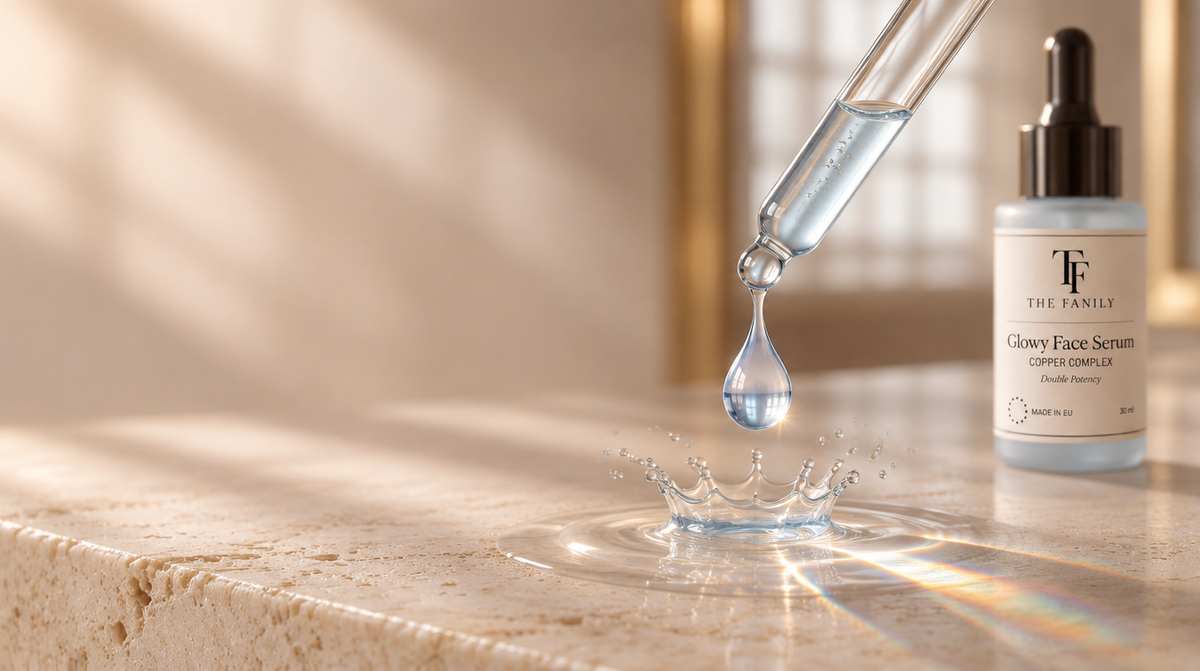
Glowy Face Serum fits perfectly into that serum layer. The light, water-based formula combines hyaluronic acid, glycerin and pro-vitamin B5 with 0.2% copper complex. It absorbs quickly, isn’t sticky and leaves room for the layers that follow. Your skin feels supple and looks visibly smoother and more radiant, even in winter. Want to know exactly how to apply the serum? See our three-step ritual.
Extra winter tips:
- Take short, lukewarm showers instead of long, hot ones.
- Put a humidifier, or a small bowl of water on the radiator, in your bedroom.
- Don’t forget your SPF during the day: UV is there all year round.
When should you see your GP or a dermatologist?
A good routine makes your skin more comfortable, but it’s no substitute for medical advice. Do you have persistent itching, open or painful patches, cracks that won’t heal, or skin that is constantly red and inflamed? There may be more going on, such as eczema. In that case, see your GP or a dermatologist.
Frequently asked questions
How often can you do skin flooding?
Most people do it in the evening, either every day or a few times a week. Pay close attention to how your skin responds: if it feels comfortable and supple, you’re on the right track.
Is skin flooding suitable for oily skin?
It can be, but keep it light. Choose water-based textures and skip heavy creams and oils. Oily skin can also become dehydrated in winter.
Can I skin flood in the morning too?
Yes, in a shorter version: a light toner, your serum and a moisturiser. During the day, always finish with SPF.
Glowy Face Serum is a cosmetic product for external use.
Sources: NBC News Select on skin flooding; The Ordinary on winter skin; CosmeticsDesign, data from Spate (July 2025); American Academy of Dermatology, overview of viral skincare trends.


Share your experience